
5 Post-Summer Budget Steps to Prepare for Higher Utility Bills

05.10.2026.
5 Post-Summer Budget Steps to Prepare for Higher Utility Bills
Autumn is a great time for a fresh start with your household budget. Summer holidays and day trips are behind you, the kids are heading back to school, and utility bills go up in the colder months as your home needs more heating and the lights stay on longer. With five simple steps, you can use the autumn months to put a plan in place so your household is calm and organised when winter arrives.
1. Review Your Summer Spending
The first step is getting a clear picture of where your money went in July and August. Once you know the real numbers, it's easier to work out how much room you have for autumn expenses and utility bills. Open the transaction history in your payment app or go through the receipts in your wallet, and sort your expenses into a few groups:
-
travel and accommodation (fuel, tolls, holiday rentals, ferries)
-
going out and leisure (restaurants, cafés, day trips, tickets)
-
children's activities (summer camps, workshops, sports)
-
back to school (books, supplies, clothing, footwear)
-
subscriptions started over the summer (streaming, apps, memberships)
Tip: make a separate note of any subscriptions and memberships you signed up for over the summer. You can cancel the ones you only needed for the summer months and free up some money for your autumn bills straight away.
For more ideas on tracking your everyday spending, read our guide to smart personal finance management.
2. Estimate Your Autumn and Winter Utility Bills
Your bills from the same months last year give you the most reliable estimate. Take your bills from October to March, add them up by category and work out the monthly average. Then add a 10–15% buffer to that average so your plan still holds if winter drags on.
|
Item |
What to check |
Planning tip |
|---|---|---|
|
Electricity |
Last year's winter bills and how you're billed (monthly estimated payments or actual usage) |
Note the month your annual statement arrives and set money aside for it in advance |
|
Heating |
Gas, district heating, firewood or pellets |
Buy your fuel earlier in the season and spread the cost over several months |
|
Water |
Your household's monthly usage |
This amount usually stays steady throughout the year |
|
Internet, TV and mobile |
Your current packages and contract terms |
Check whether your package still fits what you actually need |
|
Reserve |
Seasonal costs: boiler servicing, chimney sweeping, winter tyres |
Plan for these as a separate line in your budget |
Tip: if you pay monthly estimated bills, find out when your annual usage statement arrives. Put that date in your calendar and set aside a small amount each month to cover it.
3. Build a New Monthly Plan with Utility Bills First
A good autumn household budget starts with your fixed costs. Utility bills, rent or mortgage payments, transport and nursery fees get their share as soon as your salary comes in, and only then do the other categories follow.
-
List all of your household's monthly income: salaries, benefits, freelance fees and any other regular income.
-
Set aside your fixed costs, including the utility bill estimate from step two.
-
Decide how much goes to variable costs such as food, household supplies and fuel.
-
Set an amount for savings and goals (a winter reserve, a trip, the holidays).
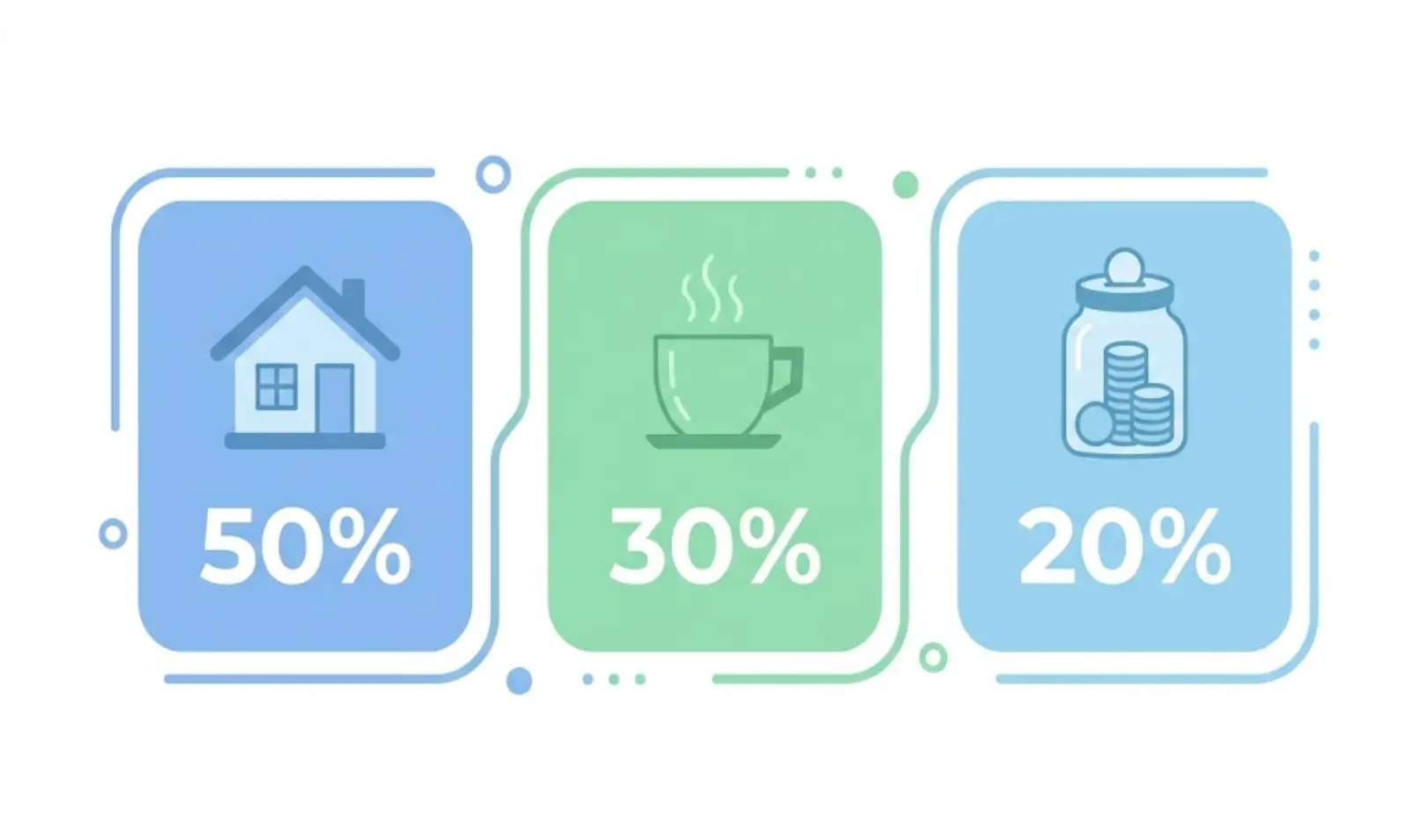
One popular way to split your income is the 50/30/20 rule: around 50% goes to essentials, 30% to wants and leisure, and 20% to savings and goals. Feel free to adjust the ratios to suit your household. What matters most is that every euro has a purpose.
We explain in more detail how small decisions shape your budget over time in our article on how to build financial independence through small everyday decisions.
4. Build Small Energy-Saving Habits
Your biggest savings on utility bills come from habits around heating, lighting and large household appliances. Each of these changes is small, but together they make a noticeable difference to your bills over the whole season.
-
Set the temperature to suit each room. Around 20 °C is comfortable in the living room, while the bedroom can be a degree or two cooler.
-
Air your home briefly but thoroughly. A few minutes with the window wide open refreshes the air while the walls and furniture keep their warmth.
-
Seal your windows and doors. Self-adhesive draught strips are inexpensive and quick to fit.
-
Switch to LED bulbs in the rooms where the lights stay on longest.
-
Run your washing machine and dishwasher with a full load and choose eco programmes.
-
Unplug appliances after use instead of leaving them on standby.
-
Make use of the lower tariff. If you have a dual-rate meter, run your appliances during off-peak hours.
Tip: introduce one new habit each week. By the end of October, you'll have a full set of savings that have become part of your everyday routine.
5. Build a Winter Reserve and Plan Flexible Solutions
A winter reserve means you can face seasonal costs prepared. Open a separate "winter envelope" and put a small amount into it every month from September to December. That way, your annual utility statement, heating fuel and holiday expenses already have a place in your budget. When several large bills land in the same month or you need to bridge the gap until your next payday, loans can be a practical solution. At Global Money Express, you can apply for between EUR 50 and EUR 3,000 with a repayment term of 15 to 180 days. You apply online in just a few clicks, and the money is paid out on the same or the next business day.
-
For a smaller amount that you repay with your next salary, short-term loans are a good fit.
-
If you'd rather spread the amount over several months, choose an instalment loan with repayments that match your monthly plan.
-
When you need the money as soon as possible, take a look at fast loans.

Tip: match the loan amount and repayment term to your plan from step three, so the instalment has a clear place among your fixed costs. We walk through the whole process, from application to payout, in our article on the online loan application process.
The Five Steps at a Glance
-
Review your summer spending and keep only the subscriptions you actually use.
-
Estimate your utility bills based on last year's winter bills, plus a 10–15% buffer.
-
Build a monthly plan that puts utility bills and fixed costs first.
-
Introduce energy-saving habits, one at a time.
-
Keep adding to your winter reserve and plan a flexible solution for bridging larger bills.
Frequently Asked Questions
When is the best time to plan your household budget for winter?
The best time to plan your household budget for winter is September and early October. By then, your summer spending is already known, and there's still enough time to build a reserve before the first large heating bills arrive.
How much money should you set aside for utility bills in winter?
Take the monthly average of last year's bills from October to March and add a 10–15% buffer. This gives you a realistic amount that also covers the colder months.
How can you save on utility bills and keep your home comfortable?
Small habits bring the biggest savings: setting the temperature to suit each room, airing your home briefly but thoroughly, sealing your windows, using LED bulbs and running appliances during off-peak hours. Your home stays warm and comfortable, and your bills go down.
Can you use a loan to cover a large utility bill?
Yes, a loan is a practical way to bridge a large bill, such as your annual electricity statement. Global Money Express offers loans from EUR 50 to EUR 3,000 with a repayment term of 15 to 180 days. Anyone aged 18 or over with a regular income, a valid mobile phone number and an active bank account can apply.